Monday, August 20, 2012

Motivation Monday


What inspires you?  Seems like an easy question...but it can be a hard one for some people to answer.

I wanted to share a commercial that inspires me.  I'm sure most of you have seen it before.  This time, really take it all in.  What do you think?  Does this inspire you? 


I get inspired by people who do things they didn't think they could...or if others thought they couldn't...but they push on anyway.  Take that first step...you CAN do it!

Friday, August 17, 2012

Fitness Friday

Free Weights vs. Strength-training Equipment


Have you wondered which method of strength training is better, free weights or strength-training equipment? The truth is, each has its advantages and disadvantages.
The choice depends on your level of experience, your exercise goals and, to some extent, your personal preference. An understanding of these factors will help you decide if free weights or machines—or a combination of both—will help you reach your goals.


The Free-weight Advantage

  • Free weights incorporate the stabilizing muscles that enable you to perform the movements you choose to make and may be more effective in producing overall muscular strength and power gains.
  • Free-weight exercises tend to more closely match the movement patterns you’re likely to need for specific sports.
  • Free weights are more versatile; you can do a wide variety of exercises with a simple set of dumbbells. You can, for example, hold the weights with palms facing forward, facing your body, or facing the wall behind you. In doing so, you can do three different exercises that will work your muscles in different ways.
  • Free weights tend to be inexpensive, are portable and take up little space.

The Free-weight Disadvantage

  • You must learn to balance the weight while exerting force. This can be difficult—and potentially dangerous—if you are lifting weights overhead.
  • The isolation of specific muscles can be difficult. To target the muscle you want, you must use very precise technique.
  • Free weights can be swung for momentum rather than lifted slowly and steadily, which works the muscles more effectively and safely.
  • Training alone can lead to injury if you don’t use proper technique.

The Machine Advantage

  • Machines are generally safer and easier to use, an advantage for beginners learning a specific movement.
  • Some machines are more efficient than free weights at isolating a specific muscle or muscle group. This is important when you’re strengthening a specific body part or rehabilitating an injury.
  • Machines ensure correct movements for a lift, which helps prevent cheating when muscle fatigue sets in.
  • Machine workouts can take less time because you can move easily from machine to machine. Changing the resistance is easy; you just insert a pin or enter a code.

The Machine Disadvantage

  • Most machines involve moving a weight along a predetermined path, making it difficult to strengthen the stabilizer muscles.
  • Machines are much more limited, with most devices allowing only one exercise.
  • Most machines are geared to the average-sized person, so if you’re shorter or taller than average, you may find it difficult to use some machines. However, some companies have developed equipment that is scaled down to suit many smaller men and women.
  • Generally speaking, if you are beginning a strength-training program for the first time, or have been away from your program for months or even years, then it’s a good idea to use the resistance-training machines for the first 10 to 12 weeks of your program.
  • Doing so will give your body the time it requires to adjust without putting undue stress on your muscles and joints. Using machines may also be easier and less discouraging if you’re a novice, because free weights require some coordination to use.
  • Experienced exercisers may want to use free weights because of the additional training benefits they offer. That said, the combination of free weights and machines can add variety to your workout.
  • If you are a health club member, be sure to ask a fitness professional to show you how to properly use the free weights and machines. If you forget how, ask until you feel confident that you are using the proper technique to complete each exercise.
  • If you are exercising at home, be sure to purchase an exercise tape that outlines proper technique. Good technique is essential if you want to reach your strength-training goals while avoiding injury, regardless of which type of resistance you choose.
*Source:  ACE

Thursday, August 16, 2012

Topic Thursday

Summer Skin


Every sunscreen has a sun protection factor, or SPF, which is a measure of its strength or effectiveness. Each of us needs a different SPF, depending on whether, and to what degree, our skin burns or tans. A tan is the direct result of melanin, a brown pigment found in the epidermis that is produced when skin is exposed to sunlight.
Melanin protects the skin by absorbing, reflecting and scattering ultraviolet radiation before it penetrates the dermis, or underlying skin. However, armor that it is, melanin can’t prevent all the negative effects of the sun, and is often representative of damage. That’s why we need to use sunscreens. To determine what SPF your skin requires, you must know how long it takes your skin to burn when unprotected and exposed to sunlight. As a rule of thumb, anyone whose skin burns, whether or not it turns into a tan, should use an SPF of 15. Check with your doctor or pharmacist if you are taking antibiotics, antidepressants or antidiuretics. Some of these medications increase your skin’s sensitivity to sunlight and may decrease the time it takes your skin to burn.

Creating a Barrier

When exercising outdoors on a hot, sunny day, light-weight, light-colored clothing combined with plenty of sunscreen on both exposed and unexposed skin is the way to go. However, if overheating isn’t a concern, dark-colored, tightly woven clothing is more effective at blocking UV rays than say, a white T-shirt, which allows UV rays to reach the skin. Another barrier against sun damage comes in the form of eyewear. Protect not only your eyes, but also the skin around them, by wearing sunglasses that block 90 to 100% of the sun’s UV rays.
And, last but not least, wear a hat. Though a cap may be more comfortable for jogging, try a wide-brimmed hat that will shade your neck and face while gardening or walking outside.

Start With the Inside

Now that you know how to protect the skin’s surface, it’s time to start thinking about what you can do to make it glow from the inside out. You’re already off to a good start with exercise, which gets the blood circulating and delivers fresh oxygen to the skin all over your body. The next step is to drink plenty of water. Outdoor exercise, especially in the summer, increases your risk of dehydration. This is one risk you don’t want to take since it not only affects your performance and robs your skin of its vitality, but may be potentially hazardous to your health. Be sure to drink fluids before, during and after activity. To replenish your fluids after any outdoor activity, weigh yourself before you participate and then again after your workout. Any weight you lost is water and should be replaced by drinking two glasses (16 ounces) of water for every pound you have lost.

Everyone Needs a Little Sunlight

It’s been shown that a lack of sunlight can cause depression. After all, most plants won’t even grow without sunshine. And when the sun comes around and makes the days longer, our first instinct is to peel off our sweaters and bask in it. Go ahead. Just take precautions so you won’t have to deal with the unpleasant (and unnecessary) consequences.

Sunscreen Facts

  • Wear sunscreen every day if you will be outside for more than 20 minutes, even when it’s cloudy.
  • Sunscreen should be applied 15 to
  • 30 minutes before going outdoors and reapplied every two hours or after swimming or sweating.
  • Don’t skimp: One ounce—enough to fill a shot glass—is considered the amount needed to properly cover exposed skin.
  • Limit your exposure to sunlight from 10 a.m. to 4 p.m. during Daylight Savings Time (9 a.m. to 3 p.m. during Standard Time), which is when the sun’s rays are the strongest and most harmful.
  • When choosing a sunscreen, look for one with an SPF of 15 or higher that provides broad-spectrum coverage against all ultraviolet light wavelengths.
  • Throw out old bottles of sunscreen, which can lose strength after three years.
Source: American Academy of Dermatology

What SPF Do You Need?

Follow these steps to calculate what SPF you should look for in a sunscreen:

1. Determine how many minutes your bare skin can be exposed to the sun before it burns.


2. Divide that number of minutes into the total number of minutes you want to remain in the sun.


3. The result is the SPF you should look for in a sunscreen.


For example, if your unprotected skin burns in 10 minutes, and you plan on being in the sun for three hours, you would need a sunscreen with an SPF of at least 18 (180 minutes divided by 10 minutes).

*Source:  ACE Fit Facts

Wednesday, August 15, 2012

Wellness Wednesday

Today's Wellness Wednesday Topic:  Eating Healthy without Breaking the Bank!

Many people think it's too expensive to eat healthy when in reality it's the exact opposite.  What's cheaper...a bag of potato chips or an entire bag of potatoes?  The bag of potatoes!!!  That's just one example.  The cheaper junk foods leaving you craving more, so you eat more.  So in the long run it's better to buy the nutrient rich foods your body needs than the junk.  When you fuel your body with the foods it needs, you'll eat less! 

Here's a list of 44 foods under $1.  It's like your very own value menu!

Protein
1. Oats, $0.13 per serving, about $1 per pound (in bulk)
: Take a tip from Mr. Ed. Oats are high in fiber, low in fat, and may even help lower cholesterol. What’s not to love?
Enjoy a bowl of oatmeal [3], substitute for flour in cookies, or even use as breadcrumbs.
2. Eggs, $0.19 per egg, about $2 per dozen: 
When in need for some protein, eggs are quick, delicious, fix. Scramble with veggies for a filling breakfast, add to homemade fried brown rice, or make a frittata!
3. Almonds, $0.60 for a 1oz serving (20-25 nuts), about $5 per 8oz bag: 
Rich in monounsaturated fat and fiber, these super-nuts [4] could reduce the risk of diabetes and decrease body weight. (Sorry, Almond Joys don’t count.) Munch on ‘em during the day, or add to a bowl of cereal or oatmeal for extra healthy fats and protein.
4. Peanuts, $0.50 for a 1oz serving (25-30 nuts), about $4 per 8oz bag
: Take me out to the ball game on the cheap. Sure, peanut butter might be a dangerfood, but in their natural form, these legumes are a healthy treat. When eating in moderation, peanuts supply a dose of healthy fats and can reduce the risk of heart disease. When add to any chicken and veggie dish, they add a great Asian-inspired flare!
5. Garbanzo beans, $0.30 per ½ cup serving, about $1 per can
: These little beans pack a serious amount of fiber. Add to a salad, roast them with curry powder, or make your own hummus.
6. Lentils, $0.12 per ½ cup serving, about $1 per pound (dry, in bulk)
: With more protein per pound than beef, lentils are a filling food rich with antioxidants (and quite tasty, too). Here are seven ways to make lentil soup, along with a killer recipe for vegetarian lentil tacos [5]!
7. Black beans, $0.30 cents per ½ cup serving, about $1 per can: 
These unassuming beans pack a ton of fiber and have a solid amount of calcium, fiber, potassium, and folic acid. Pro-tip: Buy the dry beans for an even better nutritious and money deal — boiling beans at home may preserve more of their cancer-fighting antioxidants. Cook up some black bean soup, or make a healthy black-bean dip.
8. Pinto beans, $0.30 cents per ½ cup serving, about $1 per can
: The health factor of refried beans at a Mexican restaurant may be questionable, so mash them up at home. These beans are full of protein and fiber and are a delicious addition to any homemade burrito — breakfast, lunch, or dinner!
9. Tofu, $0.50 cents per a 4 oz serving, about $2 per pound
: High in protein and low in fat, tofu is a delicious source of protein for vegetarians and meat-eaters alike. Plus, soy in moderation may help reduce cholesterol and the risk of breast cancer. Pan fry tofu with veggies in the next stir-fry, or even add the silken variety to a fruit smoothie.
10. Pumpkin Seeds, $0.50 per 1oz serving, about $5 per pound: Move over birds, these seeds are for us humans (and not just on Halloween)! Filled with essential vitamins and minerals, along with protein and iron, sprinkle these in a salad or roast with spices for a healthy, crunchy treat.
11. Chicken Breasts, $0.75 per 4 oz serving, about $2.99 per pound: 
Forgo the McChicken on the dollar menu — fresh chicken breasts are about two quarters and are filled with protein. Grill ‘em, bake ‘em, or enjoy sliced in a whole-wheat wrap with veggies.
12. Canned Salmon, $0.75 per serving, about $1.50 per can: 
No need to splurge on a salmon filet [6] to enjoy this omega-3 packed seafood. Grab the canned version for some protein power without dishing out the big bucks. Whip up some homemade salmon burgers or chowder with a twist.
13. Canned Tuna, $0.75 cents, about $1.50 per can: 
Not only is tuna fish cheap, but it’s an easy way to get omega-3’s (which could make us brilliant). Mix with Greek yogurt and chopped veggies for a healthier tuna salad.
14. Whey Protein, $0.75 cents per scoop, about $40 per 3 lb container
: Need an extra dose of protein? Add whey protein to a smoothie, bowl of oatmeal, or sneak it into the next batch of brownies.

Dairy
15. Low-fat Milk, $0.25 cents per cup, about $4 per gallon
: Got milk? One calcium-filled glass can help keep teeth strong and even help keep off those excess pounds. Add a splash to a fruit smoothie, or enjoy in a bowl of oats or cereal.
16. Low-fat Yogurt, about $1 per 6 oz cup
: Skip the bagel and pick up a quick treat that’s filled with protein and calcium! Enjoy for breakfast with some granola, or as a post-workout snack. Just beware of flavors loaded with extra sugar [7]. Extra points for choosing superfood Greek yogurt — though it can be more expensive, so waiting for it to go on sale is a smart move!
17. Low-fat Cottage cheese, $0.88 per 1/2 cup serving, about $3.50 per 16 oz container: 
It’s time to put looks aside. This clumpy, mild cheese is surprisingly high in protein, and tastes great in both sweet and savory dishes. Top with sliced pineapple and berries for a sweet protein-packed treat, or make it savory in a low-fat creamy pasta sauce.

Whole Grains
18. Whole-grain Pasta, $0.37 cents per ½ cup serving, about $3 per box:
Move over white stuff; the whole-wheat version of pasta is full of fiber, antioxidants, and protein, and may help lower risk of heart disease. Enjoy its nutty flavor with stir-fried veggies and hearty marinara sauce.

19. Brown Rice, $0.18 per ¼ cup serving, about $2 per pound
: Listen to our manifesto [8]: Choose brown rice over white (especially at Chipotle). The whole-grain version is full o’ fiber and may cut the risk of diabetes.
20. Popcorn, $0.30 per ½ cup serving, about $1 per pound for plain kernels: 
Snack attack? Pick a low calorie snack that’s also a good source of fiber. Pop kernels in the kitchen and add spices. Movie theater popcorn ain’t got nothin’ on this!
21. Quinoa, $0.60 per ¼ cup serving, about $4 per box
: It may be hard to pronounce (that’s keen-wah), but it’s easy to prepare and packs a nutritious punch. Filled with protein and fiber, this superfood also contains nine essential amino acids our bodies can’t produce on their own.

Fruit
22. Grapes, $0.75 per 1 cup serving, about $1.50 per pound
: These sweet little treats are high in antioxidants, which may help reduce cholesterol. They’re a perfect snack when that sweet tooth rolls in; freeze them for a fresh alternative for popsicles!

23. Apples, about $0.50 to $0.75 per apple (depending on variety): 
It’ll keep the doctor away, so grab this superfood for a serving of vitamin C and cancer-fighting antioxidants. Snack with almond butter or add to a sandwich.
24. Bananas, $0.20 to $0.50 per banana, about $0.60 per pound or $2 per bunch
: It’s time to go bananas for… bananas. Filled with fiber and potassium, these 100-calorie “snack-packs” may even help with that hangover. Enjoy sliced with peanut butter, or impress friends with banana ice-cream [9]!
25. Kiwi, about $0.40 per kiwi: 
Fun fact: Kiwi’s are actually berries and are filled with vitamin C and fiber. Slice it up in that next fruit salad or enjoy straight up with a spoon.
26. Cantaloupe, $0.50 per ½ cup serving, about $3 per small melon: 
C is for cantaloupe and vitamin C. Filled with antioxidants, cantaloupe is cheap and makes a perfect spring or summer treat! Feeling creative? Freeze chunks of this sweet fruit for an extra-special warm weather snack.
27. Watermelon, $0.30 per 1 cup serving, $5 per melon
: This feisty superfood may have Viagra-like effects, but it’s also guaranteed to be filled with vitamin C — a cancer fighting antioxidant that helps strengthen immunity and promote bone health. Slice em up and enjoy (or make a watermelon daiquiri).
28. Pears, $0.85 each, about $1.75 per pound (depending on variety): 
It’s not just an apple a day that may keep the doc away; white fleshy pears may help prevent strokes. They’re also full o’ fiber. Keep things mixed up and try the Barlett, Bosc, and Anjou varieties.
29. Oranges, $0.50 each, about $1 per pound (in family-sized pack): 
Oranges aren’t just about their vitamin C. This citrus fruit is also filled with fiber, folate, and potassium. Skip the glass and go with the whole fruit to surpass the excess sugar and get a healthy dose of antioxidants.

Veggies
30. Canned Tomatoes (Diced), $0.50 per ½ cup serving, about $1.80 per 14.8 oz can
: To really get a bang for that buck, go the canned route. Canned tomatoes are perfect for homemade sauces and stews. Tomatoes also contain exceptional amounts of the antioxidant lycopene that remains in the flesh even after cooking and canning. Just keep on the lookout for cans with no sodium added.

31. Canned Pumpkin, $0.75 per ½ cup serving, about $2.50 per 15oz can
: No need to go pickin’ to reap the benefits of the pumpkin patch. A pumpkin’s orange color is thanks to carotenoids, a plant pigment with powerful antioxidant properties. Head to the kitchen and whip up some pumpkin pasta sauce or even pumpkin hummus.
32. Garlic, about $0.30 per bulb: 
It doesn’t only put a stink to our breath. Garlic has some smarty-pants benefits [10], helping enhance memory. It’s also full of antioxidants to promote heart health and reduce the risk of cancer and Alzheimer’s. Add to a pan of veggies or tomato sauce to spice up the flavor, or roast it in the oven for a sweeter flavor.
33. Onions, $0.18 each, about $0.59 per pound: 
Quit crying — onions pack a surprising nutritious punch, including a hefty dose of antioxidants. Sautée and add to an omelet, or stack on a sandwich for extra flavor.
34. Sweet Potatoes, $0.50 each, about $1 per pound: 
The white ones may be a dangerfood, but this time around, the sweet stuff is the way to go. It tips the scale with its high levels of vitamin A, contains beta-carotene (which may help prevent cancer and protect us from the sun) and also helps keep that skin silky smooth.
35. Winter Squash (Acorn, Butternut, etc.), $0.50 per ½ cup serving, about $1.50 a pound
: Squash isn’t only an awesome racquet sport. It’s also a versatile veggie filled with vitamins, fiber, and potassium. Skip the bowl and roast a squash and fill with other hearty goodness!
36. Kale, $0.50 per cup (raw, chopped), about $2 per bunch
: Popeye was missing out. Kale is the antioxidant king among all fruits and veggies, and contains vitamins A, C, and K, fiber, calcium, iron, and potassium (phew!). Need another reason to eat them? Kale chips.
37. Broccoli, $0.50 per ½ cup serving, $2 per bunch
: Need another reason to go green? Broccoli has remarkably high levels of folate and vitamin C, which may help reduce the risk of certain cancers and heart disease.
38. Beets, $0.35 each, about $1 per pound
: These purple gems are filled with betalains, which may help prevent cancer and other degenerative diseases [22] [23]. They are also packed with folate, fiber, and vitamins galore, making them one of the best health bargains around. Chop em, roast em, or add to a berry smoothie!
39. Spinach, $0.50 per cup (raw), about $2 per bunch: 
These unassuming greens are unbeleafable. They’re nutrient dense with vitamin A, K, andcalcium. Try sautéing them with mushrooms or subbing for iceberg in the next lunchtime salad.
40. Carrots, $0.50 each, about $2 per pound: 
Those rabbits are on to something. Carrots provide a nutritious crunch with their fill of vitamin A. They’re perfect for dipping into hummus, or taste great roasted with other root veggies and a drizzle of olive oil.
41. Edamame, $0.50 per ½ cup serving, $3 per 10oz package (frozen)
: This star legume is filled with fiber and protein and makes a great afternoon snack. Skip the chips and enjoy with a touch of salt for a quick, nutritious treat.

Drinks
42. Coffee, $0.40 per 16 oz cup (brewed), about $10 per pound: 
Not only is it amazing for you, but brewing coffee at home can save some real dolla dolla bills. This morning pick-me-up also contains antioxidants to help protect the heart, and is a great pre-workout fuel to help increase endurance. Not thirsty? This kitchen staple doubles as the key ingredient for a variety of other household chores, too!
43. Tea, $0.10 per tea bag, about $5 a box (varies based on type)
: The varying health benefits of tea are a-plenty, ranging from their antioxidant powers to helping maintain a healthy weight. Skip the sugary stuff and try brewing iced-tea at home, and opt for green if looking to maximize antioxidant intake.
44. Water, free. (Well, kind of)
: Head to the nearest faucet — our bodies depend on it. Water keeps us hydrated (shocking), flushes out toxins in the body, and helps when trying to lose a few pesky pounds.


*Prices may vary depending on location and store; we averaged price based on multiple sources.
**Shape.com**

Tuesday, August 14, 2012

Tasty Tuesday

Did you know...frozen Bananas make a delicious ice cream?  With a consistency like soft serve and the nutrition of a fruit, this sweet treat is a summer must!  And it couldn't be easier to make!

First, here is how to make the 'Basic' ice cream:

Banana Ice Cream:


Ingredients (serves 1)
  • 1 frozen banana (slice before freezing)
Instructions
  • Place the frozen banana slices into a food processor. Process until the banana turns white, fluffy and very smooth, scraping the sides of the bowl every so often.
You can take the basic recipe and add in any of your favorites, such as:
  • Unsweetened Cocoa
  • Natural Peanut or Almond Butter
  • Frozen Pineapple (mix in with the banana while processing it)
  • Any fresh fruit that's in season (peaches are yummy right now!)
  • Dark Chocolate Chips
  • Add anything you wish!
I like to get my son excited for his 'ice cream' by having him help me make it.  He loves to know he made his own ice cream and his mommy likes knowing it's good for him!

Monday, August 13, 2012

Motivation Monday

I don't think there has been anything more motivating than the 2012 London Olympics!  I think it's impossible to watch these amazing athletes and not be motivated by their effort, work ethic and overall athleticism.  They've been training for YEARS to get to where they are and I think being that disciplined is motivating.

So it’s left me thinking: If we, average exercisers, got up and did some of my favorite Olympic sports rather than just watch them, how many calories would we burn?

The folks over at BodyMedia pulled data from hundreds of BodyMedia Armband wearers (not Olympians) and found out. I'm sure the athletes are burning much more but this looks like a good start to me!

Here’s how some favorite Olympic sports stack up (numbers are calories burned per minute):


Diving: 3
Badminton: 5.5
Gymnastics: 5.6 (wouldn’t you think it would be waaay more than badminton?)
Volleyball: 6.64
Beach volleyball: 8
Soccer: 8.83
Water polo: 10


I think the key is to find something you enjoy doing and then do it!  It can be any sport...even badminton!

Friday, August 10, 2012

Fit Friday

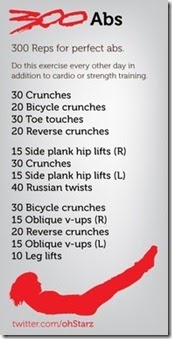
Today's Focus:  Your CORE
Try these fun workouts and exercises to help you build one strong, solid CORE!